
India is an odyssey—a profound, multi-sensory experience that rewards curiosity and openness. To fully embrace this adventure, maintaining vigilance over your health and personal safety is paramount. Minor health setbacks, especially stomach issues, are common, but with proactive preparation and adherence to simple guidelines, you can significantly mitigate risks and ensure a seamless journey.
This definitive guide covers every layer of preparation, from pre-trip medical requirements to on-the-ground food safety protocols, addressing physical, medical, and personal security concerns across the diverse terrain of India.
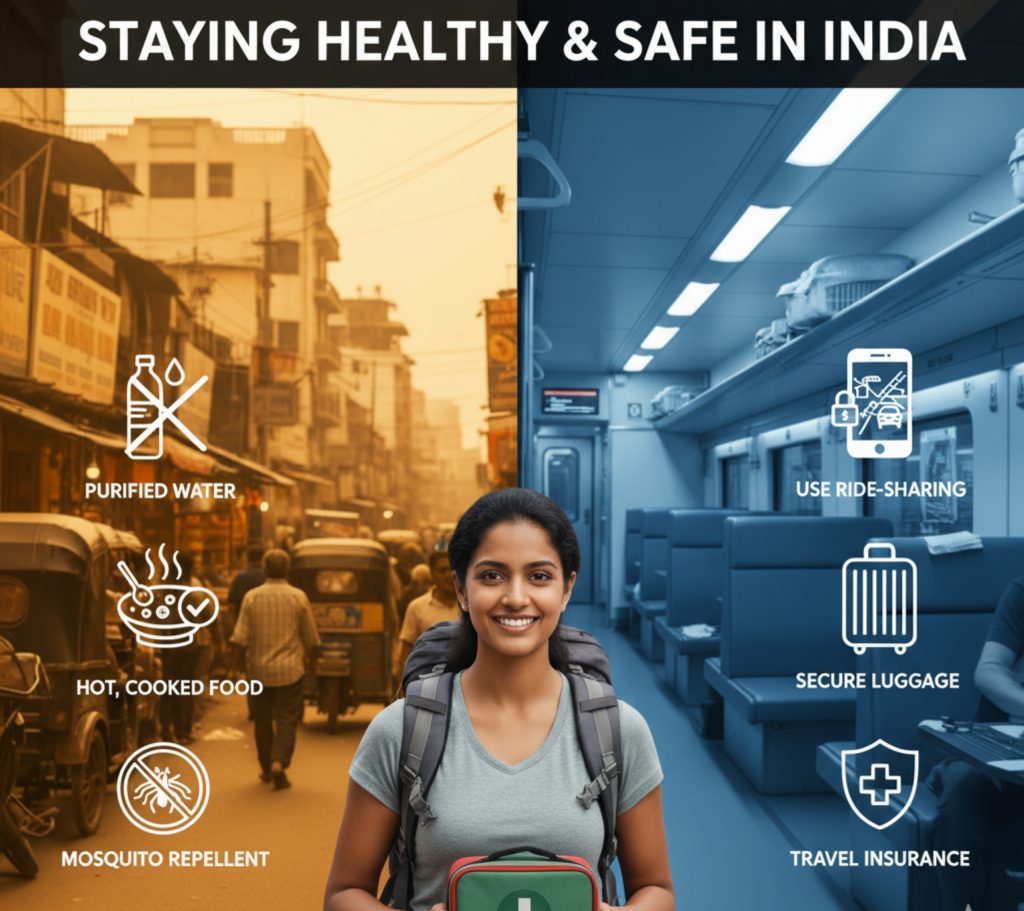
Part I: The Medical Foundation – Pre-Trip Health Planning
Consulting a medical professional or a specialized travel clinic 4–6 weeks before your departure is the essential first step. They will tailor recommendations based on your itinerary, duration of stay, and medical history.
💉 Vaccinations and Boosters
Ensure your routine vaccines are current (MMR, Diphtheria, Tetanus, Pertussis, and Polio). Beyond the routine, the following are highly recommended:
- Hepatitis A and Typhoid: These are transmitted through contaminated food and water and are essential for virtually all travelers.
- Hepatitis B: Recommended for long-term stays, frequent travel, or for anyone who might receive medical care while abroad (tattoos, procedures, etc.).
- Rabies: This pre-exposure vaccination is advised for long-term travelers, adventure tourists, cyclists, and those spending prolonged time in remote or rural areas where rapid access to medical care after a bite may be delayed.
- Japanese Encephalitis (JE): Recommended for stays of one month or longer, particularly if travel involves rural areas during the monsoon season (June to October).
💊 Malaria and Prophylaxis
Malaria risk varies significantly by region. While cities like Delhi and Mumbai are low-risk, rural areas in the Northeast, Eastern coast, and parts of Central India carry a higher risk, especially during and after monsoon.
- Consultation: Your doctor will prescribe prophylaxis (preventive medication like Atovaquone/Proguanil or Doxycycline) based on your specific itinerary.
- Remember: Prophylaxis only reduces risk; it does not eliminate it. Vigilance against mosquito bites remains the most crucial defense.
Part II: Defending the Digestive System – Conquering ‘Delhi Belly’
The most common affliction for travelers is gastrointestinal distress, often dubbed ‘Delhi Belly.’ This is almost always caused by food or water contamination. Strict adherence to these protocols is your best defense.
💧 Water Safety: The Golden Rules
- Bottled Water Only: Only consume water from sealed, branded bottles. Always check the cap seal for tampering.
- Avoid Ice: Assume all ice is made from tap water and refuse it, even in reputable-looking restaurants.
- Boil It: Stick to hot beverages (tea, chai, coffee) that have been thoroughly boiled.
- Purification Devices: For the environment and your budget, consider investing in a high-quality personal purification device like a SteriPen (UV light) or a powerful filter bottle (e.g., LifeStraw).
🍲 Food Safety: The Four Commandments
- “Cook It”: Only eat food that is served steaming hot, cooked thoroughly right in front of you. The cooking process kills bacteria.
- “Peel It”: Only eat fruit you can peel yourself (bananas, mangoes, oranges). Avoid fruit salads or pre-cut fruit from street vendors.
- “Forget It”: Avoid raw salads and cold buffets (where food may have been sitting out). The water used to wash raw vegetables may be contaminated.
- Street Food Savvy: Street food is part of the experience, but be selective. Patronize vendors with long queues and high customer turnover—this ensures ingredients are fresh and constantly being cooked. Avoid vendors who reuse oil that looks dark and sluggish.
💊 The Emergency GI Kit
Always carry a small, well-stocked kit:
- Oral Rehydration Salts (ORS): The most important item. Used to replace electrolytes lost during diarrhea and prevent severe dehydration. Use after every loose motion.
- Loperamide (Imodium): An anti-diarrheal, used cautiously only when absolutely necessary (e.g., before a long bus or flight) to slow the digestive tract.
- Antibiotics: A prescription for a broad-spectrum antibiotic (like Ciprofloxacin or Azithromycin) is wise. Only use this if symptoms (diarrhea, vomiting) are severe, persistent (over 48 hours), or accompanied by a fever.
Part III: Protection from Pests and Environmental Hazards
🦟 Mosquito-Borne Illnesses
Mosquitos are a threat, particularly transmitting Dengue, Chikungunya, and Malaria, often found in both urban and rural settings.
- Repellent: Use a powerful insect repellent containing 30–50% DEET or Picardin during peak biting times (dawn and dusk). Reapply frequently.
- Clothing: Wear light-colored clothing that covers arms and legs, especially in the evenings.
- Nights: Ensure your room is properly sealed. Use a treated mosquito net if you are sleeping outdoors or in budget accommodation without air conditioning.
🌡️ Heat and Dehydration
India’s climate can be punishing, particularly from March to June.
- Hydration: Drink far more water than you think you need. Dehydration is a major cause of fatigue and illness.
- Electrolytes: Supplement water with ORS or a pinch of salt and sugar, especially after intense activity.
- Sun Protection: Wear high-SPF sunscreen, a wide-brimmed hat, and sunglasses. Avoid peak sun hours (11:00 AM to 4:00 PM).
Part IV: Navigating Security and Personal Safety
While the vast majority of Indians are kind, helpful, and welcoming, maintaining vigilance is crucial, particularly in crowded areas.
🚂 Transportation Safety
- Ride-Sharing: Use Uber or Ola whenever possible, particularly after dark. Share your ride status with a friend. Confirm the license plate and the driver’s name before entering.
- Auto-rickshaws: Confirm the fare before starting the journey, or insist the driver uses the meter. Have small bills ready to avoid disputes over change.
- Trains: Always use a sturdy lock and chain to secure your luggage to the railing beneath the seat. If you are sleeping, keep valuables (passport, phone, wallet) secured on your person.
🚶♀️ Personal Security and Dealing with Crowds
- Valuables: Use internal, secure pockets or a money belt. Do not display expensive cameras, phones, or jewelry unnecessarily. Leave your original passport secured at your accommodation and carry a photocopy.
- Scams and Begging: Be firm but polite in declining unsolicited offers or persistent touts. Be wary of “helpful” strangers who try to steer you into closed shops or change your travel plans. Research common scams beforehand.
- Accommodation: When checking into budget hotels or hostels, check that windows and doors lock securely. Use a secondary rubber doorstop or padlock for extra peace of mind.
🧠 Psychological Well-being
The density, noise, and constant intensity of Indian cities can lead to sensory overload.
- Pacing: Do not try to rush. Schedule downtime and quiet activities.
- Quiet Spaces: Seek out quiet sanctuaries: hotel gardens, ancient temples, or peaceful parks.
- Support Network: Stay in regular contact with friends or family back home. Don’t hesitate to take a “safe day” inside your hotel if you feel overwhelmed.
Part V: Utilizing Medical Services and Travel Insurance
- Pharmacies (Chemists): Indian pharmacies are numerous and well-stocked. Pharmacists are knowledgeable and can often provide over-the-counter medication and advice for minor issues. However, never self-prescribe antibiotics.
- Hospitals: For any serious injury or prolonged illness, head directly to a major private hospital chain (Apollo, Fortis, Max, or local equivalents). They offer world-class care, English-speaking staff, and excellent infrastructure.
- Travel Insurance: This is mandatory. Ensure your policy provides comprehensive coverage for medical emergencies, and most importantly, emergency medical evacuation. The cost of air ambulance or specialized evacuation can run into tens of thousands of dollars.
By adopting a proactive and informed approach to health and safety, you honor the country by engaging with it responsibly, ensuring that your memories of India are spectacular, not stressful.