
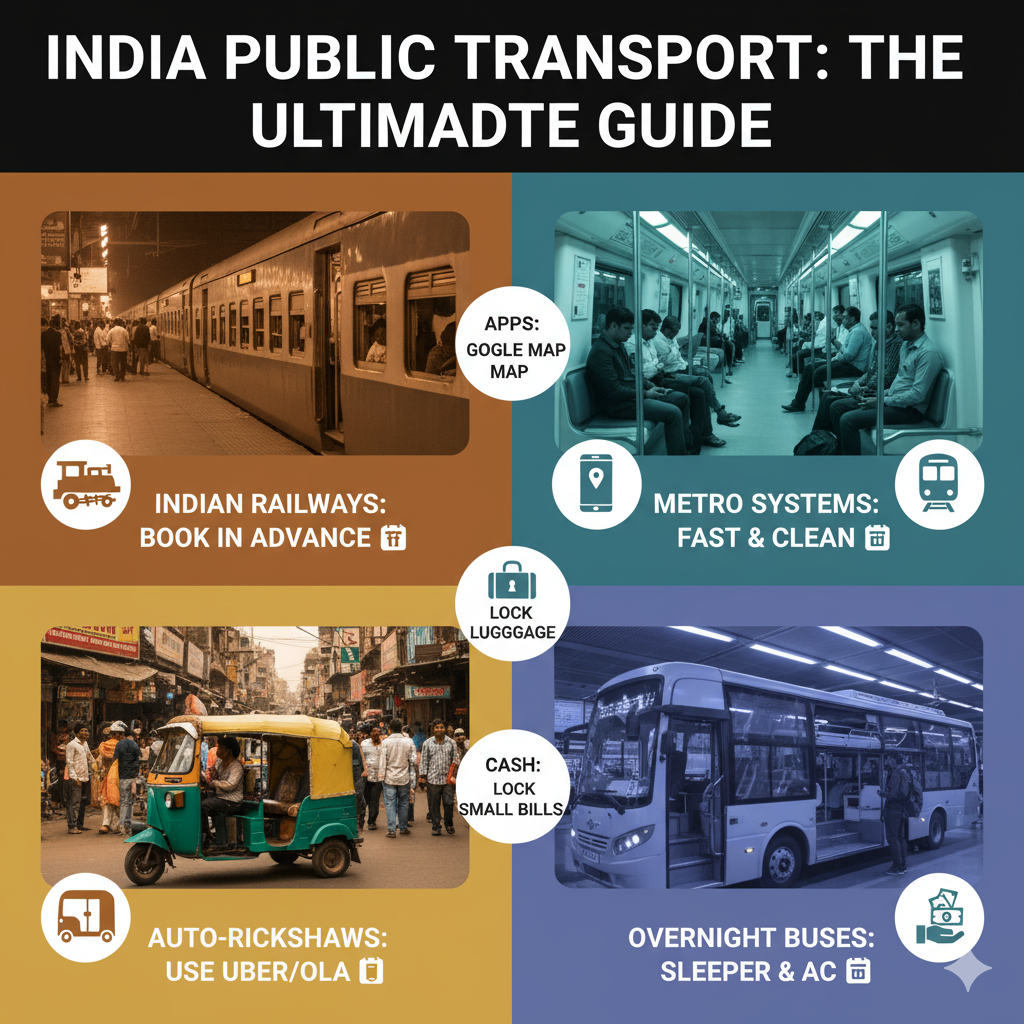
India’s transportation network is the pulsing heart of the nation—a system as complex, diverse, and vibrant as the country itself. To truly explore India is to surrender to the movement of its railways, the rhythm of its buses, and the chaotic charm of its local rickshaws. Mastering this network is the key to cost-effective travel, deep cultural immersion, and seamless navigation across the subcontinent.While the sensory overload of a packed train station or a bustling bus depot can initially be intimidating, a little preparation turns these necessities into some of your most authentic and memorable travel experiences. This definitive guide provides an exhaustive breakdown of every essential public transit mode, offering the logistics, safety protocols, and insider tips you need to travel like a seasoned local. 🇮🇳Part I: The Indian Railways (IR) – India’s Grand Lifeline 🚂The Indian Railways network is the world’s fourth-largest and transports billions of passengers annually. It is not just infrastructure; it is a moving cross-section of Indian life and culture.1. Understanding Train Classes: Choosing Your Comfort Level 💺Choosing the right class is the single most important decision for your long-distance train journey. Booking AC classes is highly recommended for safety, comfort, and hygiene, especially for first-time or solo travelers.
| Class | Abbreviation | Experience & Amenities | Traveler Profile |
|---|---|---|---|
| AC First Class | 1A | Private, lockable cabins (2 or 4 berths). Dedicated attendant, fresh bedding, highest privacy, and quietest cars. | Luxury, couples, families. |
| AC 2 Tier | 2A | Open-plan with privacy curtains. Berths stacked in twos. Comfortable, cleaner, and a good balance of cost and privacy. | Long-distance travel, excellent value for money. |
| AC 3 Tier | 3A | Open-plan with no curtains. Berths stacked in threes. Most economical AC class; usually crowded. | Budget AC travel, highly social environment. |
| Sleeper Class | SL | Non-AC, open-plan, beds stacked in threes. Windows open to the air. Not recommended for novices. | Short day journeys, lowest budget, or seeking maximum authenticity. |
2. The Booking Challenge: Securing Your Berth 🎟️
Train tickets, especially for AC classes, sell out months in advance.
- The Tools: Use the official IRCTC website or apps like MakeMyTrip/Goibibo for the most reliable service.
- Booking Window: For major routes, book tickets 120 days in advance.
- The Tatkal Lifeline: If tickets are sold out, the Tatkal (emergency) quota opens one day before departure (10 AM for AC classes, 11 AM for Non-AC). Be logged in and ready; these sell out in minutes.
- Waiting Lists (WL) and RAC: If you have a Confirmed or RAC (Reservation Against Cancellation) ticket, you are guaranteed travel. If your ticket is WL (Waiting List), monitor its status.
3. Train Safety and Security Protocol 🔒
- Luggage Security: Always secure your luggage to the metal loop under your seat using a sturdy lock and chain.
- Food: Stick to food purchased from branded railway catering or packed food from home. Never accept food or drinks from strangers—a common means of inducing unconsciousness for theft.
- Valuables: Keep passports, wallets, and electronics secured on your person while sleeping.
Part II: The Bus Network – The Backbone of Regional Travel 🚌🛣️
Buses are the indispensable workhorses of India, connecting remote villages and providing faster, more direct routes between cities not served by express trains.
1. Distinguishing Bus Types 🚍
- State/Government Buses: The most economical option. They are reliable for schedules but are basic in comfort. Look for Express or Volvo services for faster, more comfortable journeys.
- Private Buses (Luxury Operators): These offer premium services.
- Volvos/Scanias: Air-conditioned, reclining seats, much faster.
- Sleeper Buses: Feature horizontal berths instead of seats. An excellent, cheap alternative to a hotel for overnight travel. Tip: Choose lower berths for stability and comfort.
2. Booking and Boarding 📍
- Booking Platforms: Use online platforms like RedBus, MakeMyTrip, or AbhiBus to compare prices and check reviews.
- Boarding: Bus pickup points can be chaotic and poorly marked. Confirm the exact pickup location with the operator hours before departure.
Part III: Urban Mobility – Mastering the Metros and Rickshaws 🚕🏙️
In India’s dense cities, local transportation is a vibrant, multi-layered experience.
1. The Metro Systems: Modern Efficiency 🚇
India’s metro networks (Delhi, Mumbai, Bengaluru, etc.) are world-class—clean, fast, and a serene escape from the street chaos.
- Delhi Metro: The undisputed champion. Extensive and highly efficient for navigating the NCR.
- Smart Cards: Purchase a smart card immediately to bypass ticket queues.
- Women’s Safety: Most metros reserve the first carriage for women only, a great option during peak hours.
2. The Auto-Rickshaw (Tuk-Tuk): The Short-Haul Essential 🛵
The three-wheeled transport is iconic and perfect for short distances.
- The Old Way (Street Hail): Always negotiate the fare before you enter the vehicle, or insist the driver uses the meter.
- The New Way (Apps): Use Uber Auto or Ola Auto for transparent, fixed pricing and GPS tracking—the safest and easiest method. Highly recommended.
3. Taxis and Ride-Sharing (Uber/Ola) 📱
Essential for comfort, luggage transport, and late-night journeys.
- Security: Always verify the license plate against the app, and utilize the built-in safety features like sharing your trip status.
Part IV: Essential Logistics and Mindset for the Traveler 🗺️💡
Successfully navigating Indian public transport requires more than just knowing routes; it requires a certain mindset.
- Carry Small Bills (Cash): 💵 Essential for bus fares and street auto-rickshaws, as drivers rarely have change for large notes.
- Digital Lifeline: Your smartphone is your most important tool. Download and master:
- Google Maps: Unbeatable for bus/metro routes and real-time navigation.
- IRCTC/MakeMyTrip: For train bookings and status checks.
- Uber/Ola: For transparent auto and taxi fares.
- Power Backup: 🔋 Essential for keeping your phone charged while relying on it for booking, maps, and entertainment during long waits.
- Patience and Flexibility: Delays are common, and schedules are often fluid. Embrace this as part of the cultural experience. A positive attitude is the best currency.
- Embrace the Chaos: Indian transportation is a sensory feast—loud, crowded, and occasionally bewildering. Look beyond the noise, and you will find incredible moments of human connection and authentic life unfolding around you. ✨
By utilizing this comprehensive guide, you are fully equipped to master the intricate and magnificent public transport system of India, turning logistical challenges into unforgettable travel highlights.