
India is a land of unparalleled beauty, profound culture, and breathtaking diversity. Yet, its incredible popularity as a travel destination brings with it immense responsibilities. As travelers, our choices have a direct impact on the environment, local communities, and the preservation of cultural heritage. Responsible and sustainable tourism isn’t just a buzzword; it’s a mindful approach that ensures future generations can also experience the magic of India.
This comprehensive guide empowers you with actionable strategies to travel with heart and minimize your footprint, contributing positively to the places you visit in “Incredible India.”
👣 Section 1: Embrace Local — Supporting Communities & Culture 🤝
Sustainable travel begins by ensuring your money directly benefits the people and places you visit, rather than leaking out to large international corporations.

Choose Local Accommodation 🏠
- Family-Run Guesthouses & Homestays: Opt for charming, locally-owned guesthouses over large, chain hotels. Homestays, particularly popular in Kerala and Rajasthan, offer an immersive cultural experience, delicious home-cooked meals, and direct financial support to local families. You’ll gain insights into daily life that no hotel can provide.
- Eco-Resorts & Certified Stays: Look for accommodations with genuine environmental certifications (e.g., Green Globe, LEED) or those explicitly stating their commitment to local employment, waste reduction, and water conservation.
Eat & Shop Local 🍎🛍️
- Street Food & Local Markets: Indulge in India’s incredible street food culture (responsibly, of course!). Not only is it an authentic culinary adventure, but it also directly supports small-scale vendors. Explore local markets for fresh produce and unique ingredients.
- Handicrafts & Artisans: Buy souvenirs directly from artisans or fair-trade co-operatives, especially in places like Rajasthan for textiles, Kashmir for pashminas, or Varanasi for silk. Bargain respectfully, but remember the value of skilled labor. Avoid mass-produced trinkets.
- Ethical Souvenirs: Say no to items made from endangered species (e.g., ivory, certain shells), illegally sourced antiques, or products that exploit child labor.
Engage with Culture Respectfully 🙏
- Dress Codes: Be mindful of local customs, especially when visiting religious sites. Dress modestly, covering shoulders and knees. Carry a scarf for head covering when entering temples or mosques.
- Photography Ethics: Always ask for permission before taking photos of people, especially children. A smile and a gesture often suffice. Respect their decision if they decline.
- Learning & Listening: Take time to learn a few basic phrases in Hindi or the local language (e.g., “Namaste,” “Dhanyawad” – thank you). Engage with locals, listen to their stories, and be open to different perspectives without judgment.
🌿 Section 2: Treading Lightly — Environmental Stewardship 💧🗑️
India faces significant environmental challenges, and as visitors, we must consciously reduce our ecological footprint.
Minimize Plastic Waste 🚫 बोतल
- Reusable Water Bottle: This is perhaps the single most impactful action. Invest in a good quality reusable water bottle with a built-in filter, or carry purification tablets. Refill at hotels or designated stations. India’s plastic waste problem is severe, and every bottle avoided makes a difference.
- Reusable Bags: Decline plastic bags at shops and carry your own cloth bags for shopping.
- Say No to Straws: Politely refuse plastic straws when ordering drinks.
Conserve Resources 💡🚿
- Water Wisely: India is water-stressed. Take shorter showers, reuse towels, and report any leaks in your accommodation.
- Electricity Consciously: Turn off lights and air conditioning when you leave your room. Unplug chargers when not in use.
- Waste Management: Utilize designated bins for waste. Avoid littering, especially in natural areas or historical sites. If bins are scarce, carry your trash until you find one.
Respect Wildlife & Nature 🐘🌳
- Ethical Wildlife Encounters: Choose reputable tour operators for safaris or wildlife viewing that prioritize animal welfare and conservation. Avoid elephant rides, snake charmers, or any activity that exploits animals for entertainment. Observe wildlife from a respectful distance.
- Stay on Trails: When trekking or exploring natural parks, stick to marked trails to protect fragile ecosystems. Do not pick plants or disturb wildlife habitats.
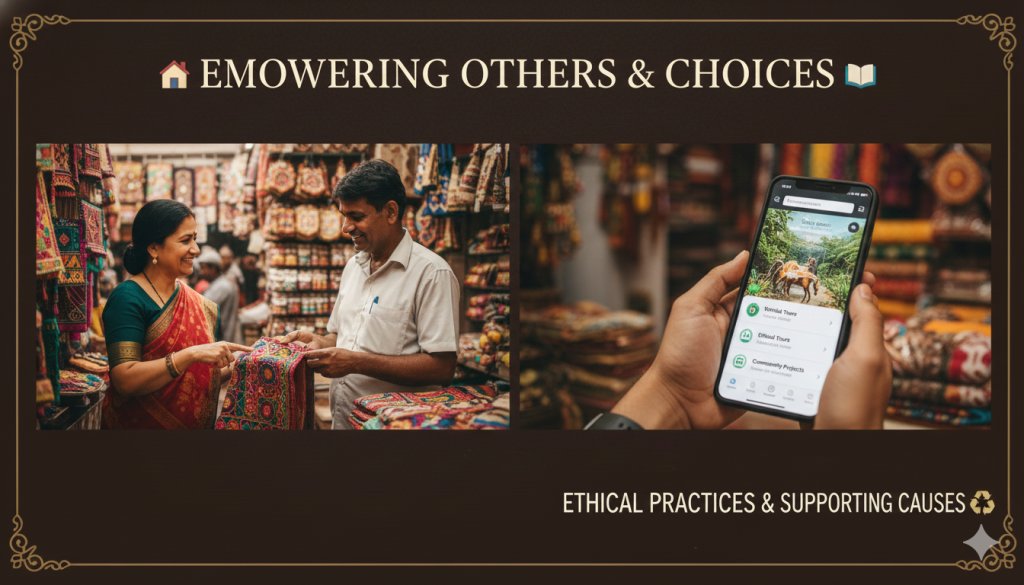
🗣️ Section 3: Empowering Yourself & Others — Ethical Practices 📚💡
Beyond individual actions, responsible travel also involves advocating for ethical practices and being an informed traveler.
Be a Savvy Consumer 🧐
- Research Tour Operators: Before booking, check if tour operators have clear policies on responsible tourism, fair wages for staff, and environmental protection. Prioritize those that engage local guides and support community projects.
- Avoid Exploitative Practices: Be wary of “volunteer tourism” opportunities, especially orphanages, which can sometimes perpetuate cycles of poverty or expose children to exploitation. If you wish to volunteer, do thorough research and choose established, ethical NGOs.
- Bargain Fairly: Bargaining is part of Indian culture, especially in markets. Do it respectfully and with good humor, but remember that a few extra rupees for you might mean a significant difference to a vendor. Don’t drive down prices to the point of being exploitative.
Your Voice Matters 📢
- Report Concerns: If you witness unethical or environmentally damaging practices by a tourism operator or facility, report it to local authorities or relevant tourism bodies.
- Share Your Experience: Encourage other travelers to adopt responsible practices by sharing your positive experiences with sustainable businesses and local initiatives. Your influence can inspire others.
- Support Conservation: Consider donating to local conservation efforts or community development projects in the regions you visit.
🚧 Section 4: Navigating Challenges — Common Scenarios & Solutions 🤔
Even with the best intentions, travelers might encounter situations that challenge their responsible approach.
- Beggars & Children: This is a sensitive issue. Giving money directly can perpetuate begging. Instead, support local charities or NGOs that provide education and support for children. Buying food from a vendor for a child is an alternative to giving cash.
- Overtourism Hotspots: In popular places like Varanasi or Jaipur, try to visit during off-peak hours (early morning/late evening) to reduce congestion. Explore lesser-known areas nearby.
- Waste Disposal: In rural or remote areas where waste infrastructure is poor, be prepared to “pack it in, pack it out” – carry your non-biodegradable waste until you reach a proper disposal facility.
🌱 Section 5: The Ripple Effect — Why It Matters So Much in India 🌏
India’s diverse ecosystems, ancient cultures, and vast populations make responsible tourism profoundly impactful. Every conscious choice by a traveler contributes to:
- Environmental Protection: Safeguarding fragile ecosystems, clean air, and water resources for a nation heavily reliant on them.
- Economic Empowerment: Ensuring that tourism revenue circulates within local communities, creating jobs and preserving traditional crafts.
- Cultural Preservation: Encouraging respect for customs, traditions, and historical sites, preventing their degradation or commercialization.
- A Richer Travel Experience: Traveling responsibly often leads to more authentic, meaningful, and unforgettable encounters with India’s true heart.
By integrating these practices into your journey, you transform from a passive observer into an active participant in preserving the very magic that drew you to India in the first place. Your adventure becomes a powerful force for good.