
Delhi is not simply a city; it is a sprawling, living palimpsest—a layered chronicle of over a thousand years of Indian history. It has been the seat of eight powerful empires, from the Sultanates and the Mughals to the British Raj, and today stands as a vibrant, chaotic, and utterly essential stop for any traveler. Navigating its sheer density and intensity requires a strategic plan.
This guide provides a comprehensive 3-Day Itinerary, meticulously breaking down the vast capital into manageable historical, imperial, and modern zones. By focusing on distinct neighborhoods each day, you can decode the capital’s complex identity, complete with essential transport tips, dining recommendations, and historical context.
Day 1: The Mughal Majesty – Old Delhi (17th Century Chaos) 🛵
Day one is a journey straight into the 17th century, focusing on the monuments, culture, and chaotic markets established during the height of the Mughal Empire. This is Delhi at its most visceral, authentic, and compelling.
Morning: Forts and Faith (3-4 hours)
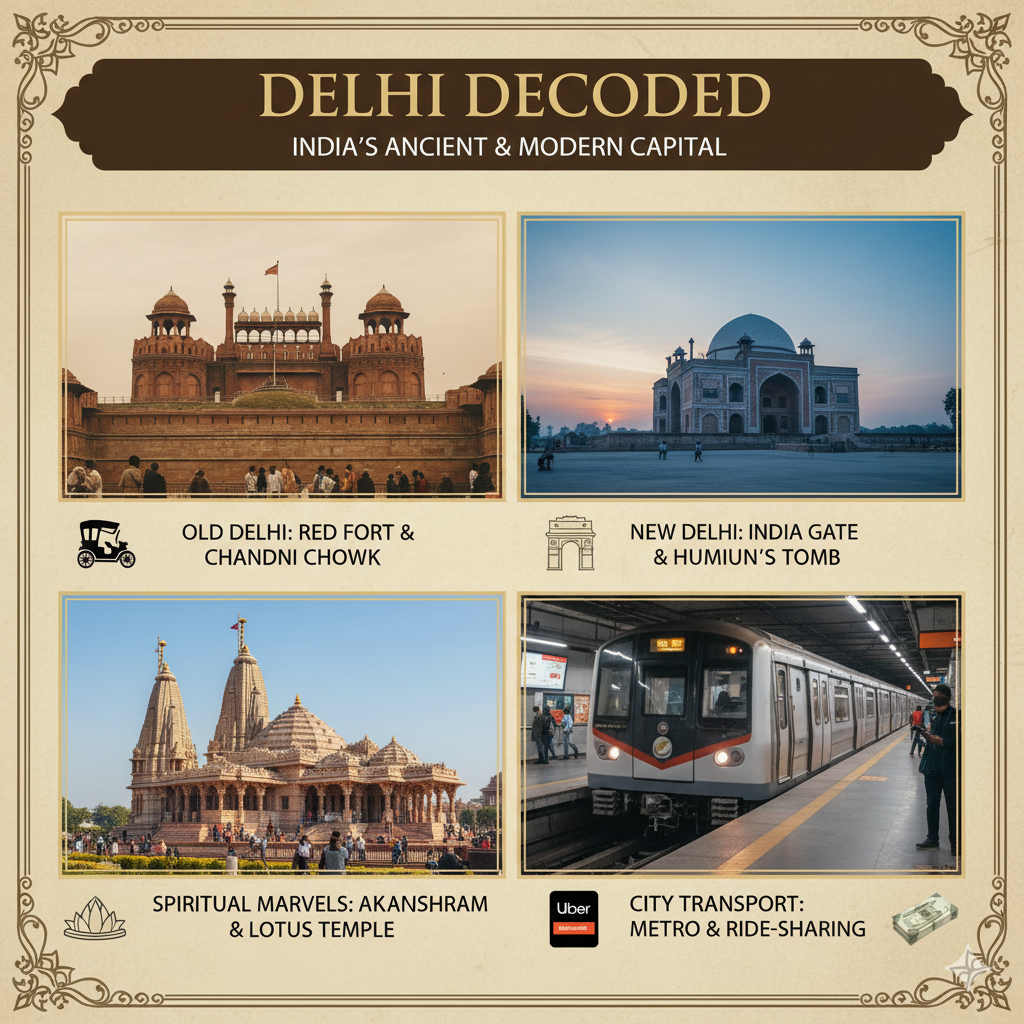
Start at the majestic Red Fort (Lal Qila) . This magnificent sandstone fortress was built by Emperor Shah Jahan (who also built the Taj Mahal) as the seat of his power, Shahjahanabad. Though partially empty today, walking through the Lahore Gate and past the Diwan-i-Aam (Hall of Public Audience) gives a powerful sense of Mughal imperial scale.
Immediately afterward, visit Jama Masjid, just across the street. As one of the largest and most stunning mosques in India, its architecture dominates the Old Delhi skyline. Insider Tip: Climb the slender southern minaret (allow 30 minutes) for a breathtaking, unfiltered view over the winding lanes and rooftops of the old city—a perfect visual introduction to the chaos below.
Lunch: The Legendary Street Food Pilgrimage 🍲
Old Delhi is India’s street food Mecca. Skip the hotel breakfast and dive in:
- Parathe Wali Gali (Lane of Stuffed Flatbreads): A narrow lane famous for shops serving deep-fried parathas stuffed with potato, cauliflower, radish, and more. A historical must-try.
- Karim’s or Al-Jawahar (Near Jama Masjid): For non-vegetarians, these are institutions known for their rich, slow-cooked Mughal delicacies like Nihari (stew) and Mutton Korma.
Afternoon: Commerce and Spice (3 hours)
- Chandni Chowk: Hire a cycle-rickshaw—this is the only sane way to navigate the spine of Old Delhi. Let the rider guide you through the dense, specialized bazaars.
- Khari Baoli (The Spice Market): The highlight. As Asia’s largest wholesale spice market, the sensory experience here is overwhelming—sacks piled high with chilies, turmeric, nuts, and exotic dried fruits. It’s an intoxicating rush of color and aroma.
- Sikh History: Take a moment of calm at Gurdwara Sis Ganj Sahib, a peaceful and historically significant Sikh temple located in the middle of Chandni Chowk.
Evening: Commemoration
Conclude the day at Raj Ghat, the simple, peaceful black marble memorial dedicated to Mahatma Gandhi. It’s a quiet contrast to the intensity of Old Delhi and a place for solemn reflection on India’s independence movement.
Day 2: Imperial Grandeur and Colonial Order – New Delhi ✨
Day two focuses on the formal, meticulously planned capital built by the British architects Edwin Lutyens and Herbert Baker in the early 20th century. This area is characterized by wide boulevards, colonial bungalows, and meticulously maintained gardens.
Morning: Mughals Meet Lodi (3-4 hours)
- Humayun’s Tomb: Begin with this majestic 16th-century Mughal mausoleum . Predating the Taj Mahal, it was the first garden-tomb on the Indian subcontinent and its primary architectural inspiration. Its Persian-inspired symmetry and beautiful Charbagh (four-part paradise garden) offer a peaceful start to the day.
- Lodhi Gardens: Stroll through these beautiful, serene gardens that seamlessly blend greenery with 15th-century architecture from the Lodi dynasty. It’s a perfect spot to observe Delhi residents exercising and socializing.
Lunch: Hipster Cafes and Art 🎨
- Lodhi Colony Market: A great lunch destination. This market is famous for being India’s first open-air public art district (Lodhi Art District), featuring huge, vibrant murals by Indian and international artists. Enjoy lunch at one of the stylish, modern cafes here.
Afternoon: The Lutyens’ Core (3 hours)
- India Gate: Visit the majestic India Gate , the massive war memorial dedicated to the soldiers of the British Indian Army who died in WWI.
- President’s House (Rashtrapati Bhavan): Drive down the Rajpath (now Kartavya Path) to view the colossal official residence of the President of India. Observe the sweeping symmetry and fusion of Indian and European architecture across the Secretariats.
Evening: Commercial Hub and Heritage Dining 🍽️
- Connaught Place (CP): Explore the iconic, circular commercial and cultural center of New Delhi. Walk through its concentric rings, browse the stores, and check out the historic Georgian-style architecture.
- Heritage Dining: Enjoy dinner at one of CP’s colonial-era restaurants (many are institutions) or head to a local favorite for rich North Indian specialty cuisine like Butter Chicken or Dal Makhani.
Day 3: Modern Faith, Innovation, and Ancient Ruins 🕌
Day three explores the juxtaposition of modern religious marvels, innovative architecture, and the pockets of ancient history that survive throughout the sprawling metropolitan area.
Morning: Spiritual Grandeur (3 hours)
Choose one of these modern spiritual masterpieces:
- Akshardham Temple: A breathtakingly vast and intricately carved modern Hindu temple complex . Dedicated to Swaminarayan, it showcases phenomenal architecture and traditional craftsmanship. Allow a minimum of three hours and check security restrictions (no phones, cameras allowed inside).
- Lotus Temple (Baháʼí House of Worship): Famous worldwide for its distinctive lotus-flower architecture, composed of 27 marble petals. It’s a tranquil space open to all faiths, emphasizing unity and silence.
Lunch: Exploring South Delhi’s Vibe
- Hauz Khas Village or Khan Market: These markets offer the best of contemporary Delhi dining, from global fusion to modern Indian cuisine, set amidst trendy boutiques and lively cafes. Hauz Khas Village is particularly atmospheric, overlooking a vast, ancient reservoir.
Afternoon: Hidden Heritage and Art (3 hours)
- Qutub Minar: Visit the soaring Qutub Minar , the tallest brick minaret in the world and a UNESCO World Heritage site. It marks the site of the first Muslim kingdom in North India and features fascinating architectural remnants.
- National Museum: If time and interest allow, visit the National Museum of India for a curated look at the country’s vast historical and artistic treasures.
Evening: Farewell Dinner and Departure
Conclude your Delhi odyssey with a final, relaxed meal in a neighborhood of your choice before heading to Indira Gandhi International Airport (DEL).
🚇 Navigating Delhi: Essential Transportation Tips
The key to enjoying Delhi lies in conquering its transportation:
- The Delhi Metro: Your best friend. It is safe, air-conditioned, efficient, and cheap. Purchase a Metro Smart Card immediately to bypass ticket queues.
- Uber/Ola: Essential for door-to-door travel, late-night journeys, and when traveling with luggage. They offer fixed fares and GPS tracking.
- Auto-Rickshaws: Use for short distances. Always confirm the fare before starting the journey, or, ideally, use the Uber/Ola app for autos to get a transparent price.
- Travel Time: Delhi traffic is infamous. Always add significant buffer time (30-60 minutes) to your estimated travel time, especially during rush hours (8 AM-10 AM and 5 PM-8 PM).
By tackling Delhi systematically, dividing the ancient from the imperial and the spiritual from the modern, you won’t just survive the capital—you’ll fall in love with its unparalleled historical depth.