
In India, the story of rice, or Dhaan (paddy) in its unhusked form, is the story of life itself. It is far more than a mere cereal grain; it is the ancient bedrock of countless civilizations, the silent backbone of the nation’s economy, the heart of myriad celebrations, and a powerful symbol imbued with prosperity, fertility, and divine blessing 🙏. From the mist-shrouded terraces of the Himalayas to the sun-baked deltas of the southern coasts, rice dictates the rhythm of agricultural life, shapes regional identity, and defines the very essence of Indian cuisine.
This comprehensive exploration delves into the millennia-old relationship between India and this humble yet mighty grain, tracing its journey from a delicate seedling in flooded fields to a revered presence on every plate and in every ritual.
Part I: The Lifecycle of Sustenance – Cultivation and Economic Impact 💰
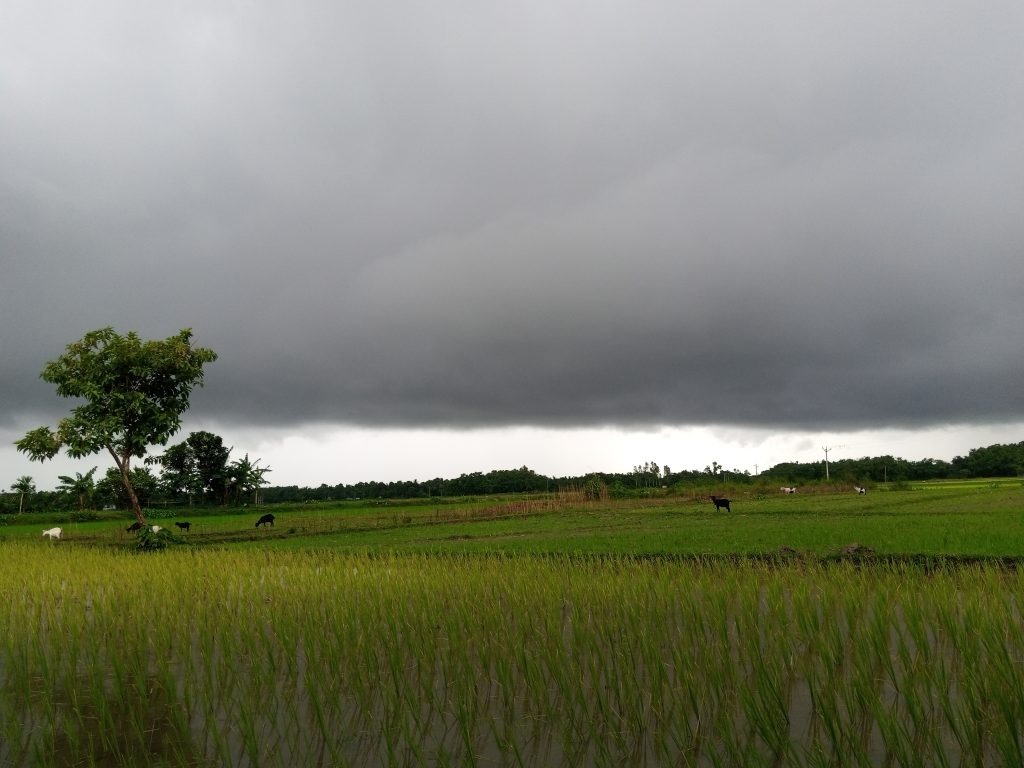
India is the world’s second-largest producer and largest exporter of rice, a testament to its pervasive cultivation and pivotal role in the national economy. The cultivation process is intrinsically linked to the monsoon, the lifeblood of Indian agriculture.
The Monsoon-Driven Cycle: 🌧️
India’s rice farming largely follows two major seasons:
- Kharif (Monsoon Crop): 💧 The predominant and largest crop, sown with the arrival of the southwest monsoon in June/July and harvested in September/October. The vast stretches of emerald green paddy fields during monsoon are an iconic Indian landscape.
- Rabi (Winter/Summer Crop): ☀️ A secondary, smaller crop, primarily grown in areas with assured irrigation. It is typically sown in November/December and harvested in March/April.
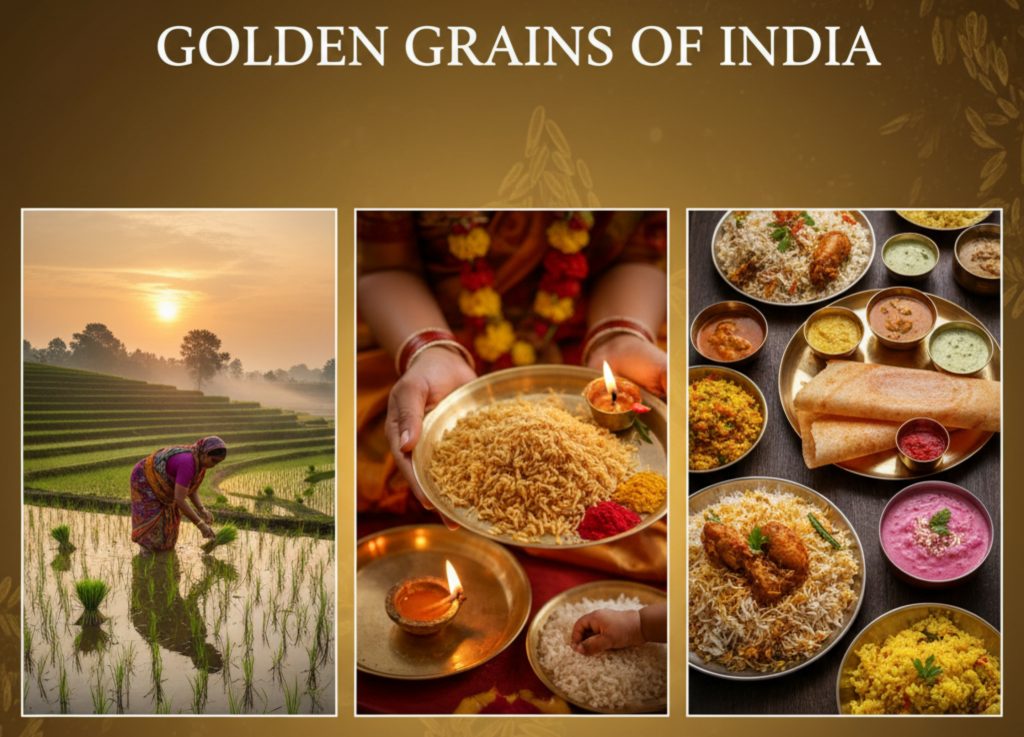
The process of rice cultivation is labor-intensive, often involving entire communities. The image of farmers, often women, meticulously transplanting tiny seedlings by hand into flooded fields, is a profound act of communal labor and traditional wisdom passed down through generations. 🧑🌾
Economic Significance: 📈
- Food Security: Rice is the primary calorie source for over half of India’s population.
- Rural Livelihoods: It provides direct and indirect livelihoods for millions of rural families, from farmers and laborers to those involved in milling and trade.
- Foreign Exchange: As the world’s largest rice exporter, Indian rice, particularly Basmati, contributes significantly to the country’s foreign exchange earnings 🌍.
Part II: The Soul of the Nation – Rice as a Cultural and Spiritual Symbol ✨
Beyond its economic and nutritional value, rice occupies an unparalleled position in the cultural and spiritual fabric of India. It is a symbol that transcends regional, linguistic, and even religious boundaries.
Symbol of Prosperity and Fertility: 💖
- Akshat (Akshata): Unbroken, uncooked rice grains, often mixed with turmeric and vermilion, are considered sacred. They symbolize completeness and prosperity. Akshat is an indispensable offering in virtually every Hindu religious ritual (puja) and blessing 🙏.
- Weddings: In many ceremonies, the bride offers rice to the sacred fire, praying for the prosperity of her new home. Guests sprinkle rice over the couple as a blessing for fertility and longevity 💍.
- New Beginnings: It is customary to enter a new home with a pot filled with rice, symbolizing an invitation for abundance and good fortune 🏡.
Ceremonies of Life: 👶
- Annaprashan: This significant rite of passage marks a baby’s first solid food. Almost universally, this first meal is rice, signifying the child’s transition to nourishment from the earth.
- Harvest Festivals: Festivals like Pongal ☀️ in Tamil Nadu, Bihu in Assam, and Nuakhai in Odisha are dedicated to the rice harvest, expressing gratitude to the deities for their bounty.
Part III: The Culinary Canvas – Unpacking India’s Rice Diversity 🍚
India’s geography and traditions have given rise to an astounding array of rice varieties.
A. Basmati: The Aromatic Monarch of the North 👑
- Region: Himalayan foothills (Punjab, Haryana).
- Characteristics: Known globally for its distinct nutty flavor, delicate aroma, and long, slender grains that elongate without breaking.
- Culinary Applications: The undisputed king for Biryani 🍲, Pulao, and elegant steamed rice.
B. Sona Masuri & Ponni: The Everyday Workhorses of the South and Central India
- Region: Andhra Pradesh, Telangana, Tamil Nadu.
- Characteristics: Medium-grain, lightweight, and non-sticky varieties, perfect for daily consumption.
- Culinary Applications: Foundation for plain boiled rice served with Sambar and Rasam in South Indian thalis. Used for making soft Idlis and Dosai. 🥞
C. Matta Rice (Red/Brown Rice): The Nutritional Powerhouse of Kerala ❤️
- Region: Coastal regions, particularly Kerala.
- Characteristics: Parboiled, medium-grain rice with a reddish-brown bran layer, giving it an earthy flavor and chewy, high-fiber texture.
- Culinary Applications: A staple in Kerala, served with traditional Sadya (feast) dishes and rich fish curries 🐠.
D. Short-Grain Aromatic and Sticky Varieties: East and Northeast India’s Treasures 🥟
- Region: West Bengal, Assam, and the Northeast.
- Characteristics: Varieties like Gobindobhog and Joha are known for their delicate aroma. Bora Saul is a famous sticky rice.
- Culinary Applications: Used in aromatic Bengali Khichuri and sweet Payasam. Crucial for traditional cakes (pitha) in the Northeast.
Part IV: The Transformed Grain – Iconic Rice Dishes of India 🌶️
Beyond simply steamed or boiled, rice undergoes a miraculous transformation in Indian kitchens.
- Biryani: The most celebrated layered rice dish, cooked with meat or vegetables, saffron, and whole spices 🌟.
- Idli and Dosa: Soft, fluffy steamed cakes (Idlis) and thin, crispy crepes (Dosai) made from fermented rice-lentil batter.
- Poha (Flattened Rice): A light, quick breakfast dish tempered with mustard seeds, curry leaves, and turmeric in Western and Central India.
- Kheer and Payasam: The beloved rice puddings, cooked with milk, sugar, and spices—the essential dessert for every celebration 🥛.
The journey of rice in India is a microcosm of the nation itself: diverse, deeply rooted in tradition, resilient, and utterly indispensable. It is a testament to India’s enduring connection with its land and its timeless ability to transform simple ingredients into profound cultural expressions. 🇮🇳
Follow Author :