
Bengal's Purple Carpet: Beauty, Pest, or Hidden Treasure?
If you travel through the rural landscapes of Bengal, especially during the post-monsoon season, you'll inevitably be greeted by a sight of breathtaking beauty: vast stretches of water turned into a "purple carpet."
The stunning images below capture this phenomenon—a sea of light lavender flowers floating atop a bed of thick, green leaves. This is the Water Hyacinth, known locally as Kachuripana.
But this plant has a story far more complex than its beauty suggests.
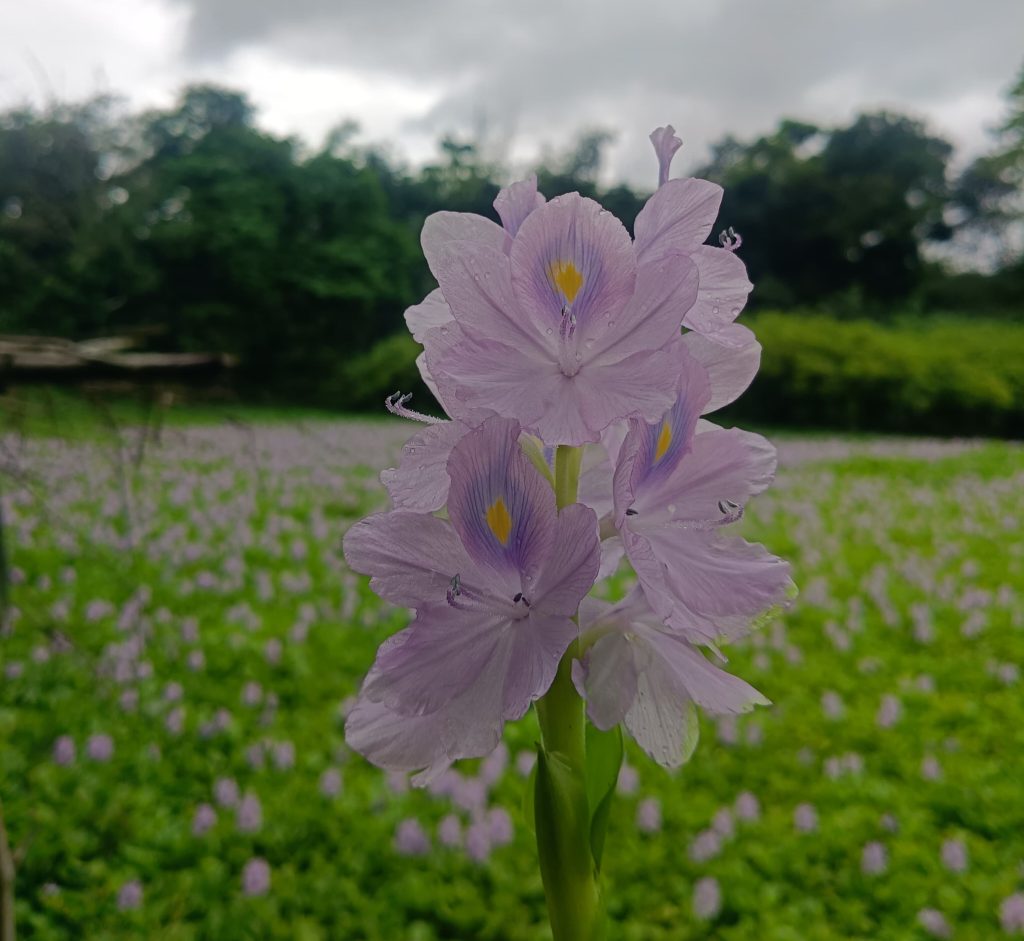
What Exactly is this Plant?
This is not just one species, but the most common one you see is Eichhornia crassipes.
- Common Name: Water Hyacinth
- Scientific Name: Eichhornia crassipes
- Origin: It is not native to India. It was originally from the Amazon basin in South America and was introduced to Bengal as an ornamental plant in the late 19th century because of its beautiful flowers.
It quickly escaped cultivation and, with no natural predators, it took over rivers, lakes, and ponds, earning it the title of one of the world's most invasive aquatic plants.
When Does it Bloom?
The spectacular blooming you see in these pictures is a seasonal event.
In West Bengal, the Water Hyacinth typically has its peak blooming season during the late monsoon and post-monsoon months (roughly August to November). The combination of abundant water, warm temperatures, and high humidity creates the perfect conditions for it to grow rapidly and flower profusely.
The Problem: A "Beautiful Menace"
While stunning to look at, the Water Hyacinth is a major problem for the local ecology and economy:
- It forms thick, impenetrable mats that block waterways, making boat navigation impossible.
- It blocks sunlight, killing off native underwater plants and fish.
- It depletes oxygen in the water, further harming aquatic life.
- It is a breeding ground for certain species of mosquitoes.
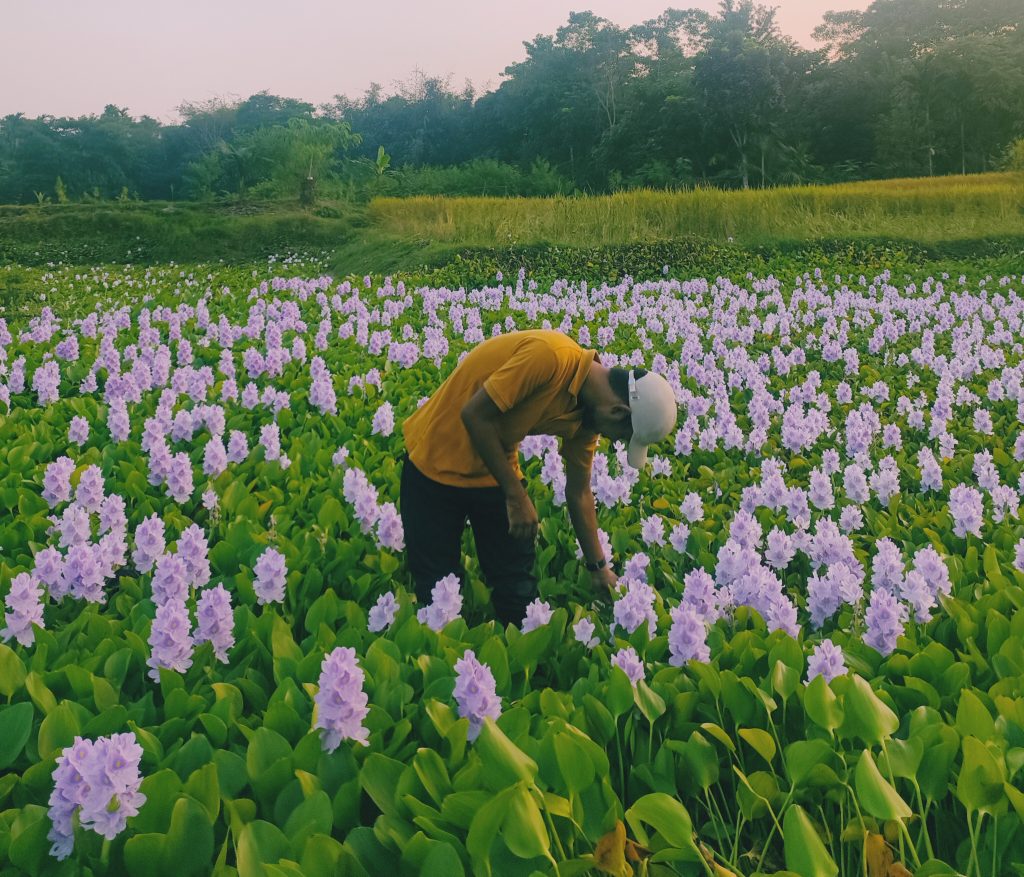
A local interacts with the field, a common sight in rural Bengal.
How Rural Bengal Uses the "Problem Plant"
This is where the story gets interesting. In rural Bengal, nothing goes to waste. The local people have found ingenious ways to turn this "pest" into a "resource."
- Cattle Fodder: This is the most common use. Villagers harvest the fresh, leafy plants, chop them up, and feed them to their cows and buffaloes. It's a free and readily available source of green fodder.
- Organic "Gold" (Compost): Farmers pull the plants from the water and pile them up on land to dry and decompose. This creates a nutrient-rich organic compost, which they use as fertilizer for their fields.
- Mulching: The leaves are used to cover the soil in vegetable patches (mulching), which helps retain moisture and prevents weeds from growing.
Beyond the Village: The Modern Potential
The uses don't stop at the village level. Today, this plant is being recognized for its vast potential:
- Handicrafts: This is a fast-growing industry. The dried stems are woven into beautiful, eco-friendly products like bags, baskets, mats, and even furniture.
- Biogas Production: The plant matter can be fermented in a biogas digester to produce methane gas, which can be used for cooking.
- Wastewater Treatment: The roots of the Water Hyacinth are incredibly effective at absorbing heavy metals and other pollutants from contaminated water. They act as natural water filters.
🌿 The Moment of Peace
More than just the visual beauty, this image captures something we all search for: a moment of pure, uninterrupted peace.In our loud, fast-paced, concrete world, we crave these pockets of stillness. This is a moment of escape. It’s the simple act of stopping, standing, and just looking. It’s about being swallowed by the vastness of nature, allowing the calm of the purple field to seep into you.There are no notifications, no deadlines, no noise. There is only the quiet observer and the immense, silent beauty before him.

Conclusion: A Story of Perspective
The Water Hyacinth, or Kachuripana, is a perfect example of how perspective matters. It is simultaneously a destructive invasive species and a beautiful natural wonder. More importantly, it is a valuable, free resource for the resourceful people of Bengal.
It is a plant with a dual identity, reminding us that in nature, the line between a "pest" and a "provider" is often just a matter of human ingenuity.
What are your thoughts on this "beautiful problem"? Have you seen it being used in other ways? Let me know in the comments!