
India is a world apart—a place where the chaos of urban life is juxtaposed with the profound silence of ancient forests. Within these jungles, a powerful conservation success story unfolds, centered around the apex predator: the Royal Bengal Tiger. India’s network of over 100 National Parks and 54 dedicated Tiger Reserves offers some of the most diverse, intense, and rewarding wildlife viewing experiences available globally.
This guide is your deep dive into the history, ecology, and intricate logistics required to experience the heart-stopping thrill of a safari in India, covering the iconic parks, their unique specialties, and the conservation triumphs that keep them wild.
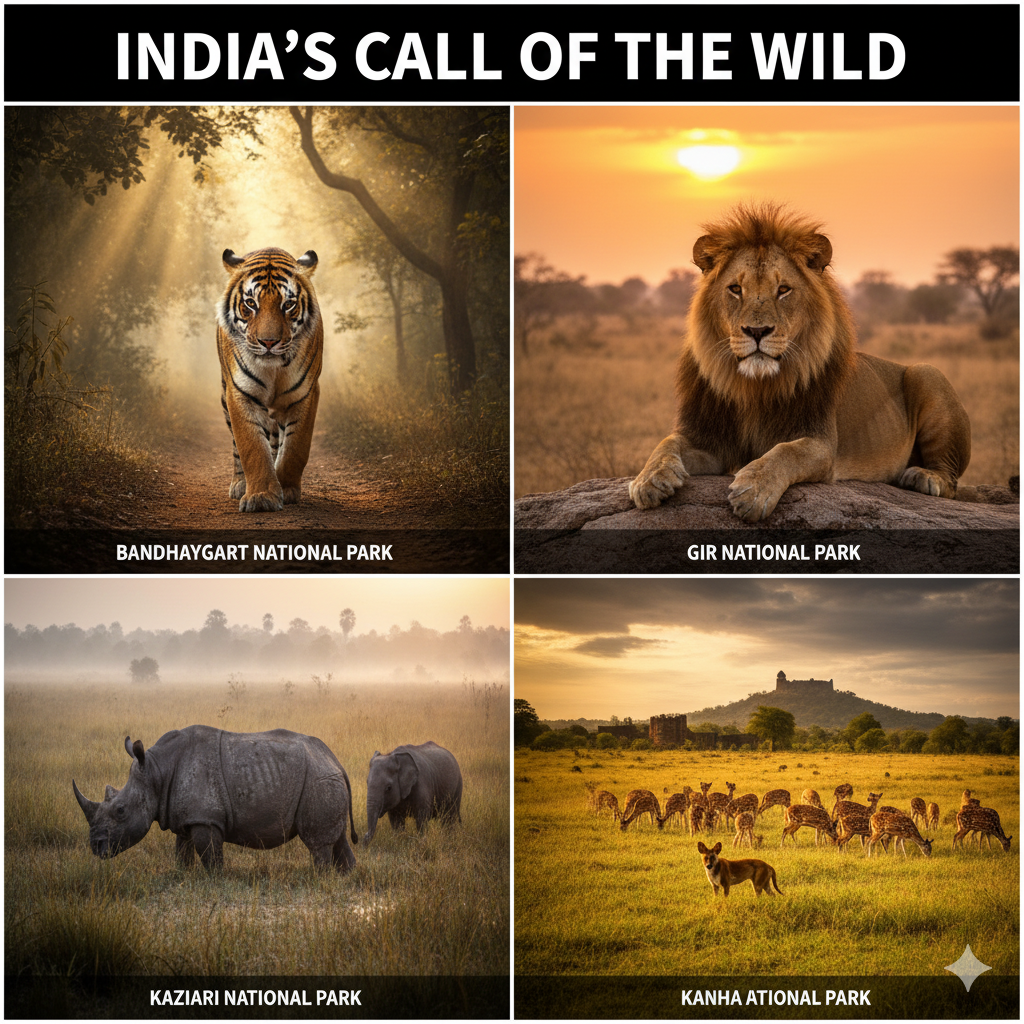
Part I: The Genesis of Indian Conservation
To appreciate the thrill of the safari, one must understand the foundation of India’s commitment to its wildlife.
Project Tiger: A Global Success Story
The turning point for Indian conservation was the launch of Project Tiger in 1973. At the time, tiger populations were critically low due to relentless trophy hunting and habitat loss. This initiative created dedicated Tiger Reserves, which are managed with strict protection and anti-poaching measures.
- Impact: Since its launch, the project has overseen a remarkable rebound. India currently hosts nearly 75% of the world’s wild tiger population, a monumental achievement celebrated globally. The latest addition, the Rani Durgavati Tiger Reserve in Madhya Pradesh, highlights the continuous expansion of these protected areas.
- The Umbrella Species: The tiger is considered an umbrella species. By protecting its habitat, thousands of other species—from the majestic Wild Dog (Dhole) to the endangered Barasingha—are also protected, safeguarding the entire ecosystem.
Core vs. Buffer Zones
Every Tiger Reserve is divided into two distinct areas, which impacts the traveler’s experience:
- Core Zone: This is the critical habitat where wildlife enjoys the highest legal protection. Tourism is highly regulated and limited to specific tracks and limited jeeps. Most highly sought-after tiger sightings occur here.
- Buffer Zone: This is the surrounding area, often involving villages and forests. Tourism is more permissible, and while sightings are less frequent, this zone is vital for connecting fragmented habitats and reducing human-wildlife conflict by involving local communities.
Part II: The Six Wonders of India’s Wilderness
India’s parks are geographically and ecologically diverse. We break down the absolute must-visit destinations based on their specialties.
1. Bandhavgarh National Park (Madhya Pradesh)
- Specialty: Highest Density Tiger Sighting
- Vibe: Compact and rugged, set around a towering 2,000-year-old fort. Bandhavgarh is a classic for tiger photography due to its incredibly high concentration of big cats in a relatively small area.
- Best Safari Zones (The Big Three):
- Tala Zone: The most famous and historically reliable, featuring open meadows and waterholes near the fort ruins. Permits here sell out fastest.
- Magadhi Zone: Connected to Tala, known for consistent sightings and a mix of grassland and forest.
- Khitauli Zone: A rising star, often featuring specific tigers and being less crowded than Tala.
- Ecology: Dominated by Sal and bamboo thickets, offering excellent cover for predators.
- Specialty: The Jungle Book Landscape and Barasingha Success
- Vibe: Vaster and more undulating than Bandhavgarh, Kanha is considered one of the most beautiful parks in Asia, famous for its sweeping maidans (grassy meadows) that inspired Rudyard Kipling’s The Jungle Book.
- Conservation Success: Kanha is the global flagship for the successful conservation of the Hard Ground Barasingha (Swamp Deer), which was brought back from the brink of extinction here.
- Key Sightings: Tigers, Leopards, Barasingha, and the highly social Dhole (Indian Wild Dog).
- Safari Zones: Kanha and Kisli are the primary core zones, known for excellent Barasingha viewing in the meadows, while Mukki is popular for reliable tiger sightings.
- Specialty: Tiger Sightings Amidst History
- Vibe: Uniquely blends history and wilderness. The park’s dry, deciduous landscape is punctuated by lakes (Padam Talao, Malik Talao), ancient hunting pavilions, and the magnificent Ranthambore Fort.
- The Ranthambore Difference: Tigers here are known to be more diurnal (active during the day) and often patrol the lake edges, providing iconic shots of big cats against historical ruins.
- Safari Zones: The park is divided into ten zones. Zones 1-5 are the old, highly sought-after core zones due to their close proximity to the water bodies and historical structures. Zone 3 is historically famous for lake-side sightings.
- Specialty: India’s Oldest Park and Elephant Habitat
- Vibe: Established in 1936, this is India’s first national park. Located in the foothills of the Himalayas, its landscape shifts dramatically from riverine grasslands to dense Sal forests.
- Key Sightings: While tigers are present, Corbett is perhaps the best park in North India for sightings of the Asiatic Wild Elephant, Leopards, and over 650 species of birds.
- The Ultimate Immersion: Dhikala Zone is the most prestigious area. Permits allow travelers to stay inside the core forest area in forest rest houses, offering an unparalleled night-time jungle experience (permits required up to 4 months in advance).
- Specialty: The Last Home of the Asiatic Lion
- Vibe: A mix of dry deciduous forest and scrubland, Gir is the sole remaining natural habitat of the Asiatic Lion (Panthera leo persica).
- Conservation Success: Thanks to intense protection efforts since 1965, the lion population has rebounded from under 20 to over 600, making it one of the most successful species conservation stories globally.
- Key Sightings: Asiatic Lions (who live in pride structures different from their African cousins), Leopards, and the unique Chowsingha (four-horned antelope).
- Specialty: The Rhino Kingdom and Wetland Ecology
- Vibe: A UNESCO World Heritage Site defined by the immense floodplains of the Brahmaputra River, vast elephant grass, and marshland.
- Conservation Success: Home to over two-thirds of the world’s population of the endangered Great One-Horned Rhinoceros. The park’s fierce anti-poaching measures have made it a global model for rhino conservation.
- Unique Safari: Opt for the early morning Elephant Safari (in addition to the jeep safari) for the best views of the rhinos wading safely through the tall elephant grass.
- The 120-Day Rule: Permits, especially for core zones in popular parks (Tala, Dhikala, Zone 3 Ranthambore), often open up for booking 120 days in advance and sell out instantly. Book your permits before you book flights or hotels.
- Vehicle Types:
- Jeep (Gypsy): Recommended. Offers the best flexibility, maneuverability, and a clear, low-angle view for photography. Seats up to 6 people.
- Canter (Open Bus): A cheaper option, accommodating 16-20 people. Used mainly for tourism in high-traffic zones.
- Guide and Driver: The permit allocates you a driver and a mandatory park guide. Their local knowledge is invaluable; treat them respectfully and tip them well for their expertise.
- Closure Period: Most parks are closed during the Monsoon Season (July to September) due to heavy rainfall, which makes jungle tracks impassable and is the primary breeding season.
- The Dry Season (March to May): This is the peak sighting period. The intense heat causes vegetation to thin out and forces animals (especially big cats) to congregate near the limited water sources, drastically increasing your chance of a sighting.
- The Shoulder Season (October, February, June): Excellent weather, lush green forests, but generally lower sighting frequency as water is abundant.
- Silence: This is the most crucial rule. Turn off phone ringers and maintain absolute silence. Loud chatter scares animals away and disrupts other visitors’ experiences.
- Dress Code: Wear neutral colors (khaki, olive green, brown). Avoid bright, primary colors like red or yellow, which can alarm wildlife.
- Stay Seated: You must remain seated in the vehicle at all times. Exiting the vehicle is strictly forbidden except at designated rest points.
- No Trash or Feeding: Never leave behind trash or attempt to feed any animal. This alters their behavior and is detrimental to their survival.
- Focus Beyond the Tiger: While the tiger is the star, learn to appreciate the entire ecosystem: the call of a jungle fowl, the spotted deer herd, the massive Gaur (Indian Bison), and the vast birdlife. The jungle’s beauty is often in the details.