
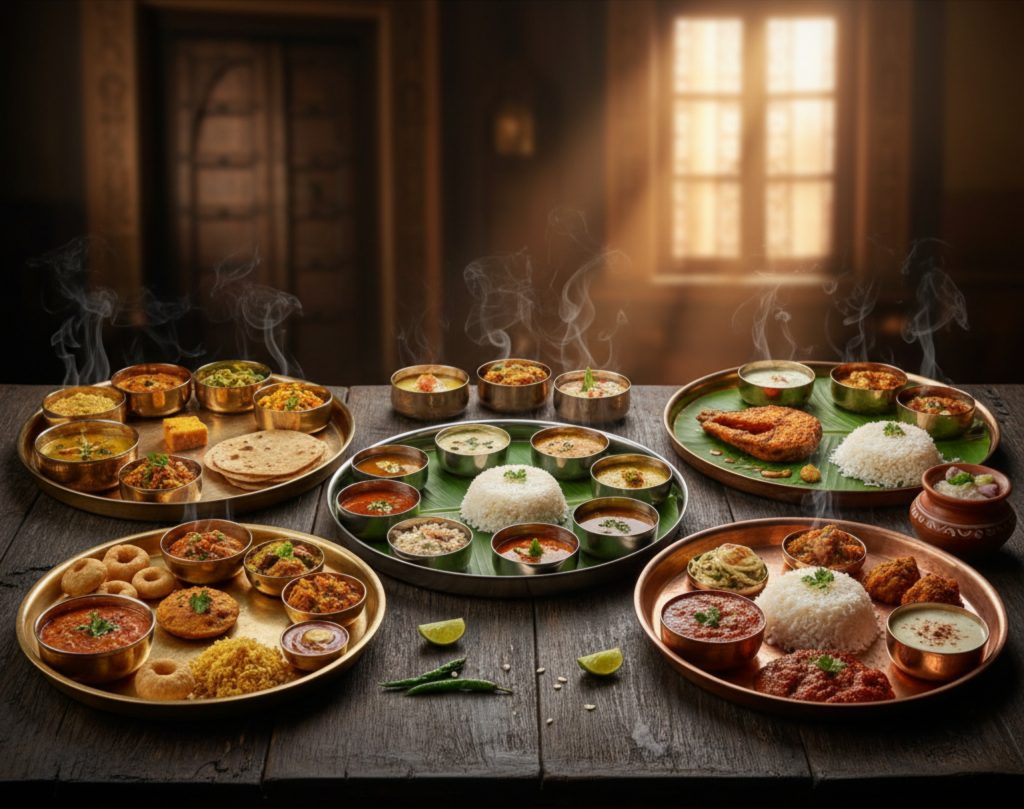
To truly understand India is to sit down for a Thali. More than just a meal, the thali (literally meaning “plate”) is a living embodiment of Indian philosophy, history, and geography, all served on a single platter. It represents the ancient Ayurvedic principle of balanced nutrition, aiming to satisfy all six cardinal tastes—sweet (madhura), salty (lavana), sour (amla), pungent (katu), bitter (tikta), and astringent (kashaya)—in every single sitting.
As you travel across the subcontinent, you will quickly learn that there is no singular ‘Indian Thali.’ Instead, there are thousands of variations, each meticulously curated to reflect the local climate, agricultural produce, historical influences, and the unique cultural identity of its region. From the arid richness of Rajasthan to the fiery coconut coast of Kerala, the thali is your passport to the most authentic flavors of India.
Get ready for an in-depth culinary journey as we break down the history, philosophy, and five essential regional thalis you must experience.
The Philosophy of the Perfect Plate: Ayurveda and the Thali
The concept of the thali has deep roots in Ayurveda, the traditional Indian system of medicine. Ayurveda teaches that a healthy body requires a balance of the three doshas (Vata, Pitta, and Kapha), and that our food must engage all six tastes to properly nourish us physically and spiritually.
A traditional thali is deliberately composed to hit all these notes:
| Taste (Rasa) | Example Dish (Role in Thali) | Ayurvedic Function |
|---|---|---|
| Sweet (madhura) | Halwa or Kheer (Dessert) | Provides energy, calming. |
| Sour (amla) | Kadhi or Lemon Pickle | Aids digestion, sharpens appetite. |
| Salty (lavana) | Salted Dal or Rice | Balances minerals, enhances flavor. |
| Pungent (katu) | Chilli/Ginger in Sabzi (Vegetable) | Clears sinuses, stimulates circulation. |
| Bitter (tikta) | Fenugreek (methi) or Bitter Gourd | Detoxifying, antibacterial. |
| Astringent (kashaya) | Turmeric or some Lentils | Clears excess mucus, drying quality. |
By serving all these tastes in separate bowls (katoris), the thali allows the diner to mix and match, customizing their experience while ensuring a complete and satisfying meal.
1. The Royal and Rugged: Rajasthani Marwari Thali (The Desert Feast)
The cuisine of Rajasthan, the land of deserts and formidable forts, evolved out of necessity. With scarce water, lack of fresh vegetables, and the need for food that could be carried and stored by armies, the food became rich, durable, and reliant on lentils, dried beans, and dairy fat (ghee).
Core Characteristics:
- Ghee Over Water: Liberal use of ghee provides necessary fat and keeps dishes rich.
- Non-Perishables: Reliance on dried lentils (dal) and dry ingredients like besan (gram flour).
- Hearty Breads: Favors coarse grains like bajra (millet) or makki (corn) over wheat.
Essential Components to Look For:
- The Trinity: Dal Baati Churma: The iconic centerpiece. Baati are hard, baked wheat balls soaked in copious amounts of hot ghee. They are crushed and mixed with the Panchmel Dal (a five-lentil curry) and followed by Churma (a sweet, crushed wheat dessert).
- Gatte ki Sabzi: Spiced gram flour dumplings (gatte) simmered in a tangy yogurt gravy—a flavorful substitute for vegetables.
- Ker Sangri: A unique, tangy preparation made from local desert berries (ker) and wild beans (sangri), a true taste of the Marwari landscape.
2. The Sweet and Subtle: Gujarati Kathiawadi Thali (The Mercantile Balance)
The Gujarati thali, almost exclusively vegetarian, reflects the state’s long-standing mercantile history, featuring a complex yet balanced flavor profile that leans slightly toward sweetness to counteract the heat of the climate. It is a true symphony of tastes, often served on a banana leaf or a large stainless steel thali plate.
Core Characteristics:
- The Sweet Note: Most sabzis and dals incorporate a touch of jaggery (gur) or sugar.
- The Farsan Element: The thali usually includes a small, steamed or fried snack (farsan) like dhokla (spongy, fermented rice and gram flour cake) or khandvi (delicate gram flour rolls).
- Kadhi: The signature light, sweet, and sour yogurt-based curry that is essential for mixing with rice.
Essential Components to Look For:
- Gujarati Dal: A lightly sweet, tangy lentil preparation made with pigeon peas and flavored with peanuts and often a piece of raw mango or tamarind.
- Undhiyu: A complex, mixed-vegetable casserole baked slowly underground (in its most traditional form) or slow-cooked. It’s a specialty, especially in winter.
- Rotli (or Phulka): Thin, soft whole-wheat flatbreads served hot.
- Surti Locho: A light, steamed snack similar to dhokla, originating from the city of Surat.
3. The Light and Fiery: South Indian Meals (The Banana Leaf Experience)
While the term ‘thali’ is used, in the South (particularly Tamil Nadu, Kerala, and Andhra Pradesh), a full meal is simply called ‘Meals’ and is traditionally served on a fresh banana leaf. This meal is fundamentally different from its Northern counterparts, focusing almost entirely on rice.
Core Characteristics:
- Rice is King: Large quantities of steamed rice (often boiled or parboiled varieties) form the foundation.
- The Liquid Trio: Features a rapid progression of thin broths—Sambar, Rasam, and Moru (buttermilk).
- Coconut and Curry Leaves: Heavy reliance on coconut, coconut oil, mustard seeds, and curry leaves for tempering and flavor.
Essential Components to Look For:
- Sambar: A thick, tangy, protein-rich lentil and vegetable stew.
- Rasam: A thin, intensely peppery and sour soup used as a digestive tonic.
- Kootu/Poriyal: Dry vegetable preparations (poriyal) or mashed vegetable-lentil curries (kootu).
- Curd Rice (Thayir Sadam): The ultimate coolant, eaten at the end to settle the stomach after the chili-laden courses.
4. The Coastal Spice: Bengali Thali (A Fish and Rice Affair)
A Bengali thali is defined by two things: the abundant use of freshwater fish and the sequential eating philosophy, where flavors progress from bitter to pungent, and finally to sweet.
Core Characteristics:
- Fish Focus: While vegetables are central, no Bengali thali is complete without a fish preparation (or sometimes meat).
- Sequential Eating: Dishes are served in strict order, starting with Shukto (bitter vegetable mix) to cleanse the palate.
- Mustard Oil: The primary cooking medium, lending a sharp, pungent kick to the food.
Essential Components to Look For:
- Shukto: A slightly bitter, creamy vegetable curry made with milk and spices, eaten first.
- Dal: Often a mild lentil preparation like Masoor Dal (red lentils).
- Maach Bhaja (Fried Fish): A simple, lightly spiced slice of fried fish.
- Jhol/Kalia: A light fish curry (Jhol) or a rich fish preparation (Kalia).
- Mishti Doi: The concluding sweet—a fermented sweet yogurt.
5. The Valley Delight: Kashmiri Pandit Thali (The Non-Vegetarian Waza Wan Influence)
While the full, elaborate Kashmiri feast is the Wazwan (a multi-course Muslim banquet), the Kashmiri Pandit thali offers a rich, aromatic non-vegetarian meal that uses yogurt, fennel, and ginger without the use of onion and garlic.
Core Characteristics:
- Aromatic Spices: Heavy use of fennel powder (saunf), dry ginger powder (saunth), and cardamom.
- Yogurt Base: Many non-vegetarian curries, like Yakhni, are cooked in a yogurt-based gravy for a creamy texture.
- Rice Staple: Served with locally grown, high-quality white rice.
Essential Components to Look For:
- Roghan Josh: The signature dish—slow-cooked mutton curry flavored with Kashmiri dry chilies and aromatic spices (no onion or garlic in the Pandit version).
- Dum Aloo: Potatoes slow-cooked in a spicy red curry.
- Gogji Rajma: Kidney beans cooked with turnip in a thick, flavorful gravy.
- Phirni: A thick, creamy rice pudding, often served in small earthenware pots.
🍽️ Essential Etiquette and Tips for Your Thali Experience
- It’s All-You-Can-Eat (Often): Many regional thalis (especially in Gujarat and Rajasthan) are all-you-can-eat. Servers often walk around offering second and third helpings directly onto your plate. Pace yourself!
- Bread vs. Rice: In North Indian thalis, use the bread (roti, chapati) to scoop up the sabzis and dals. Switch to rice when you move to the more liquid items like rasam or sambar (in the South).
- Mixing is Encouraged: Unlike Western dining, mixing your rice with dal, rasam, and ghee is completely normal and expected. It’s the best way to enjoy the meal.
- Finish with Sweet: Always save the sweet dish (dessert) for last to fulfill the full Ayurvedic cycle and cleanse your palate.
- Use Your Hands (South India): When eating a South Indian meal on a banana leaf, use the fingers of your right hand to mix and eat the food. It’s the traditional and accepted way to enjoy the meal.
The next time you find yourself at a restaurant offering a thali, remember that you are not just eating dinner; you are participating in a delicious, centuries-old cultural ritual. It is the quickest, most rewarding way to experience the geographical and historical soul of India, one perfectly balanced katori at a time.